Revell
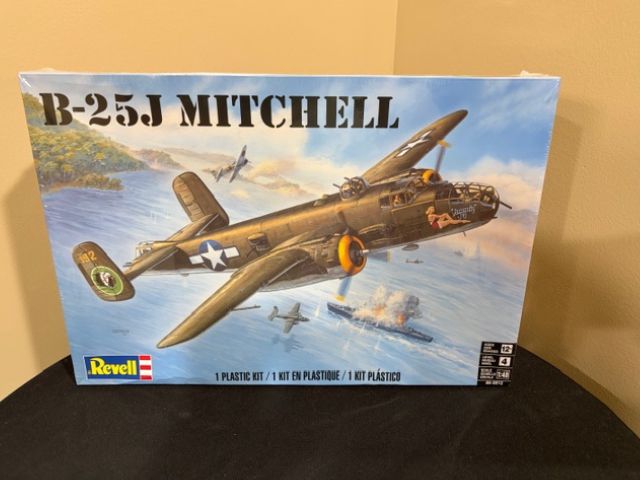
Revell 1/48 B-25J Mitchell
About the B-25 Mitchell
The Revell 1/48 B-25J Mitchell is a plastic model kit representing the late-war version of the North American B-25 Mitchell, a famous World War II American medium bomber.
This kit is produced by Revell and is based on the original Monogram tooling first released in 1977, which has been reissued several times over the years under the Revell-Monogram and Revell USA labels.
Despite its age, it remains a popular kit among aircraft modelers because of its size, detail, and relatively affordable price.
The model is built to 1/48 scale and produces a fairly large finished aircraft. When completed, the wingspan is about 16.75 inches (approximately 42.5 cm) and the length is about 14.25 inches (about 36 cm).
Kit Details
- Manufacturer
- Revell
- Kit Number
- 85-5512
- Scale
- 1/48
- Parts Count
- 147
- Difficulty
- intermediate
- Nation
- USA
Specifications
- crew
- 5
- height m
- 4.98
- length m
- 16.13
- wingspan m
- 20.6
- max speed kmh
- 438
- wing area sqm
- 57.4
Additional Information and Details
The kit typically contains around 130 to 140 plastic parts molded in gray styrene, along with clear parts for the cockpit canopy, bombardier nose glazing, and other transparent sections. The one I purchased from Amazon comes with 147 parts. Decals are included for selected aircraft markings along with a painting and assembly guide.
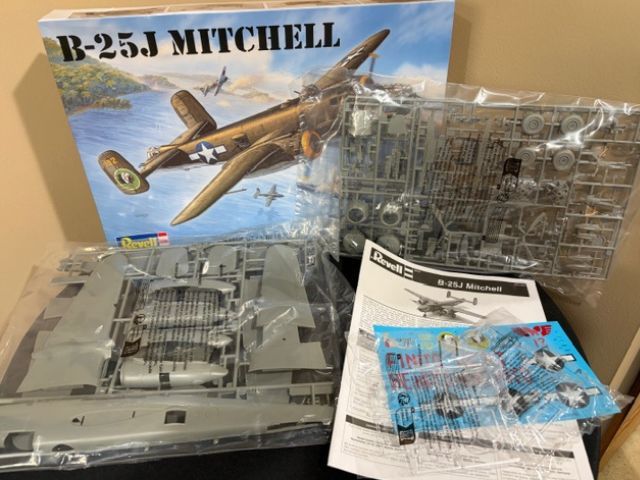
The kit represents the B-25J variant, which was one of the most widely produced versions of the Mitchell bomber used during World War II. This variant commonly featured a glazed bombardier nose and multiple .50 caliber machine guns for both offensive and defensive armament.
For an older kit, the model includes a surprising amount of interior detail. The cockpit area, crew compartments, and bomb bay are all represented, and the bomb bay can be built with bombs included.
The kit also includes landing gear, propellers, and several gun positions around the aircraft. The interior provides a good starting point for builders who want to add additional detailing.
Because the molds date back to the 1970s, the kit reflects the engineering style of that era. Panel lines are raised rather than recessed, and some smaller details such as the engines are simplified because they are mostly hidden inside the engine cowls.
Builders may need to do some extra sanding and filling in certain areas, particularly around the fuselage seams and nose section.
Some on the Facebook groups I follow have mentioned some specific fit problems which can be common in kits at this price range. I have not started mine, so I will update this once I do and share my build log.
Paint This Kit
Need help choosing the right paints for this build? Our painting guide covers paint types, brands, and application techniques for scale models.